Nightgown
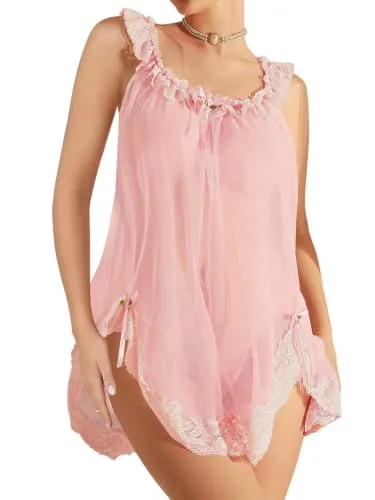
Nightgown, Pink (size M, 2 pieces)
sheer
4.6 out of 5 · 670 ratings$9.69
Delicate is not a wash cycle, it is a promise nobody made. Here is what the care label is actually required to tell you, and what to do with the rest.
This piece quotes the federal care labelling rule and explains how to read a label against it. The label sewn into a specific garment is the instruction its maker is answerable for: where a label and anything here disagree, follow the label.
Lace does not wear out. It gets destroyed, usually in one wash, usually by a machine, and almost always at a point you could have closed with your fingers beforehand.
Everything below follows from that. There is no maintenance regime here and no special product to buy. There are five habits and about five minutes.
There is a federal rule about care labelling on clothing, and it is more specific than most people assume.
The label must state whether the product should be washed by hand or machine.
Hand or machine. Not delicate, not gentle, not care as appropriate: the label has to commit to one of two things. If it says hand wash, that is a statement the maker has to stand behind.
To fail to possess, prior to sale, a reasonable basis for all regular care information disclosed to the purchaser.
A reasonable basis, before sale. Which means the instruction on the tag is not a legal shrug, it is a claim the maker is answerable for, and it outranks anything written on a page like this one.
Eyelash lace is the kind with loose fibres standing off the edge, and it is the trim on a large part of this range. Those fibres are the whole point of it and they are also its weakness.
In a drum the garment is not being washed so much as beaten against itself and against everything else in the load. The loose fibres tangle with each other, felt into a mat, and never come apart again. No wash bag prevents this, because the garment is tangling with itself rather than with the drum.
Mesh fails differently and just as fast. It has no fibre strength across the hole, so any snag becomes a run, and a run in mesh spreads exactly the way a ladder in a stocking does.
A tiny amount of ordinary liquid detergent is fine. Three things are not.
The label may also carry a warning, and warnings in this rule have a required form.
The warning must use words “Do not,” “No,” “Only,” or some other clear wording.
So a tag saying Do not bleach is not a suggestion or a disclaimer. It is the regulated wording for a thing that will damage the garment.
A two-piece set can go in the same basin. A four-piece often should not, and the reason is the garter belt.
Garter belts carry metal clips and adjusters, and those are the hardest objects in the whole wash. Put one in with mesh and it will find the mesh. Wash the hardware separately or last, in the same water, once the delicate pieces are out and pressed.
Stockings are the opposite problem. They are the finest thing in the parcel and they snag on a fingernail, let alone on a hook. They also take about thirty seconds to wash, which makes doing them on their own the least inconvenient rule on this page.
Some labels carry symbols instead of sentences, and the rule permits it as long as the words are there too.
Four of them matter on lingerie. A basin with a hand in it means hand wash only. A basin with a number gives a maximum water temperature. A crossed triangle means do not bleach. A crossed square with a circle inside means do not tumble dry, and on this kind of garment the last two are almost always crossed.
If a label carries a symbol you cannot read, the wording is required to be there as well, and the wording is the part that governs.
Less often than most people assume, and this is the part that quietly extends the life of a set more than any washing technique.
A garment worn for an evening against clean skin is not soiled. Airing it overnight and putting it away is a complete answer, and the piece that gets washed after every wear is the piece that ages fastest.
The exception is anything worn to sleep in, which is most of the nightwear department. That is genuinely worn against skin for eight hours and does want washing on the same rhythm as a t-shirt.
Lingerie is stored badly almost universally, and the fault is always the same: it is crushed under something.
Deep reds and blacks make up most of this range, and both are dyed to a depth that gives some of itself back at the start.
That is normal and it is finite. The first two or three washes release surplus dye, after which the colour is stable. What is not finite is what happens if you wash a wine red with a white chemise in the same basin: the white takes the surplus and keeps it.
So the rule is only about the beginning. New reds and blacks wash alone for the first few times, and after that a mixed basin is fine.
Three failures worth recognising early, because effort spent on them is wasted.
Once the loose fibres have matted there is no combing them apart. The garment still works, it just no longer has the trim you bought it for.
It spreads with wear and there is no stitch that stops it. A clear nail varnish at each end buys a few wears and nothing more.
A band that has been through heat does not come back. It is the commonest end for a bralette and the reason cool water is first on the list rather than last.
Lingerie travels badly for a reason that has nothing to do with creasing. It gets packed loose, and loose means the hooks find everything.
The whole fix is a single freezer bag or a fabric pouch per set, hooks fastened before it goes in. It weighs nothing, it takes the same space, and it is the difference between unpacking a set and unpacking a knot.
The second travel note is about satin specifically. Satin creases where it folds and the crease sets in a warm suitcase, so a satin slip should be rolled rather than folded. Mesh and lace do not care.
Every card here names the fabric the maker publishes, and that is the fastest way to know which of the failures above applies to a given piece before you buy it.
| Fabric | Where it fails first | Machine | Pieces in range |
|---|---|---|---|
| Sheer | the shoulder seam | no | 261 |
| Floral lace | the hook and eye | no | 91 |
| Lace | the scalloped edge | no | 72 |
| Mesh | a snagged thread, which runs | no | 17 |
| Satin | a set crease | cold, inside a bag | 12 |
| Faux leather | a cracked coating | never | 1 |
If the piece count rather than the care is your question, the piece on what actually comes in a lingerie set covers what arrives in the parcel.
Where this came from
Office of the Federal Register
16 CFR Part 423, Care Labeling of Textile Wearing Apparel
Every source above was opened and read on the date shown. Where a page says something we cannot check ourselves, we quote it and name it rather than restating it as our own.
Pieces this piece is about
sheer
4.6 out of 5 · 670 ratings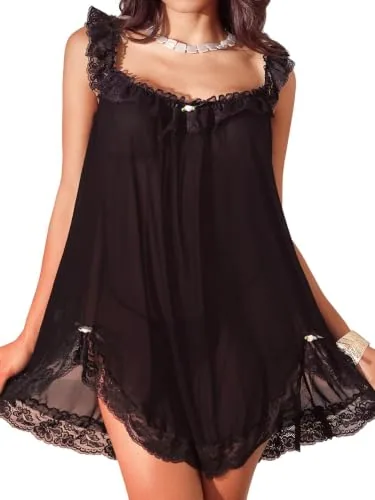
sheer
4.6 out of 5 · 670 ratings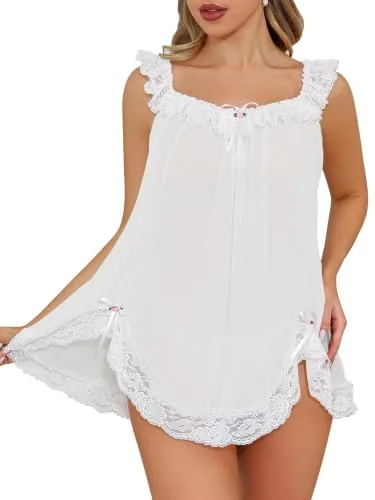
sheer
4.6 out of 5 · 670 ratings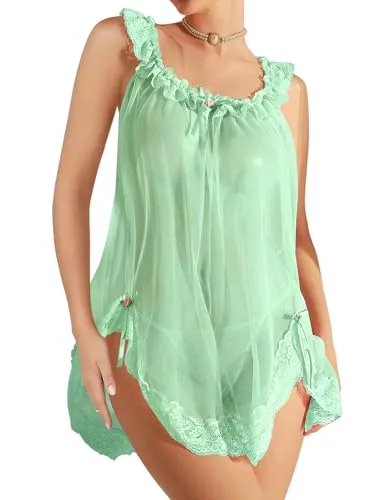
2 pieces · sheer
4.6 out of 5 · 670 ratingsKeep reading